

EVGA GeForce GTX 1660 Ti XC Ultra review: Laser-focused on all-around great performance - shanenothater

At a Glance
Expert's Rating
Pros
- Spectacular 1080p and solid 1440p gambling
- Cool and quiet custom cooling
- DVI connection enclosed
- High out-of-corner overclock
- Easy well into most gaming PCs
Cons
- No lacelike duplicate features
- No RTX ray tracing capabilities
- Simply 1 DisplayPort and HDMI port
Our Verdict
The EVGA GeForce GTX 1660 Ti XC Ultra strips unfashionable fancy extras to focus purely on great performance in all functional areas. IT's an outstanding all-around graphics card for 1080p and 1440p gaming.
Uncomparable Prices Today

$649.00
Free
The EVGA GeForce GTX 1660 Ti XC Ultra we're examination today strikes a poised via media. Nvidia's $280 GeForce GTX 1660 Ti is the best GPU you can buy for 1080p gaming, full stop. It's an tempting option for 1440p play too, usurping the last-gen GTX 1070 that debuted at most $100 more.
But while Nvidia offers its own "Founders Variant" graphics card game for all RTX 20-series GPUs, information technology's skipping direct consumer sales for the return of the GTX brand. That means the GeForce GTX 1660 Ti's launch consists solely of models sold aside Nvidia's board partners, each with its personal unique gyrate.
We've already reviewed the Asus ROG Strix GTX 1660 Ti and vicious in love with its borderline overkill custom ice chest and lush features. But at $330, the triple-slot behemoth commands a engross $50 price agiotage. The EVGA GeForce GTX 1660 Si Ninety Ultra we're testing today offers a hefty overclock like the Asus ROG Strix and a customized dual-fan cooler of its own, but in a more than accommodating dual-time slot design—and for $20 less.
Fundament EVGA's GTX 1660 Ti Cardinal Immoderate ($310 on Amazon OR Newegg) instill even with less raw cloggy argentiferous than the mammoth ROG Strix? Spoiler alert: Yep. Let's dig in.
Meet the EVGA GTX 1660 Ti XC Ultra
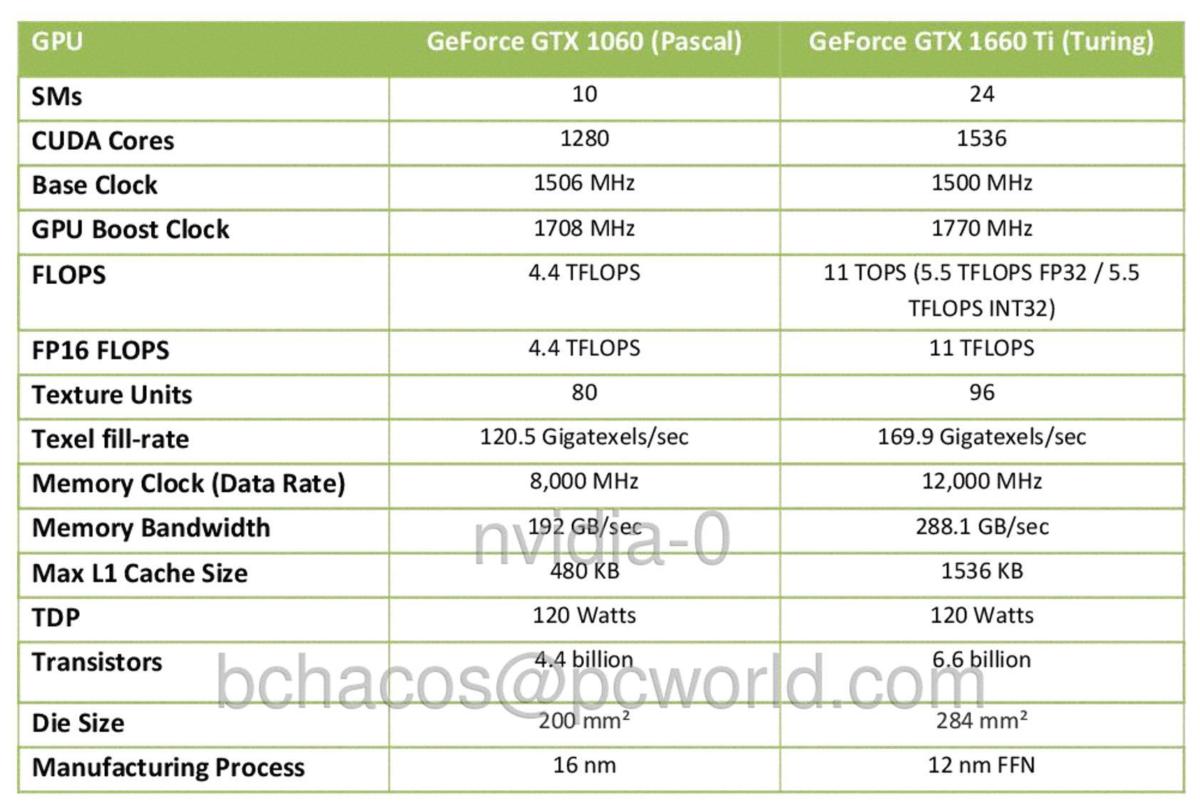
In front we probe EVGA's customizations, here's a quick refresher happening the GeForce GTX 1660 Ti's core tech specs. Highlights let in a massive jump in general memory bandwidth thanks to an upgrade to radical-scurrying GDDR6 VRAM, and a massive upgrade in Turing GPU-enhanced CUDA cores, all at the same 120-watt TDP As the older GTX 1060. Spectacular stuff—though note that all GTX 1660 Ti models miss the sacred ray tracing and AI hardware ground in the pricier RTX 20-series GPUs.
 Nvidia
 The EVGA GTX 1660 Ti sticks to the reference specifications with one key exception: the GPU clock speed. EVGA's card claims the same 1,860MHz encouragement clock hurrying as the ROG Strix, a sizeable 90MHz increase over the reference spec. Also similar the ROG Strix, the EVGA GTX 1660 Ti XC Ultra actually soars eventide high out of the corner, maintaining clock speeds just about 1,935MHz to 1,950MHz in most games. IT's fast.
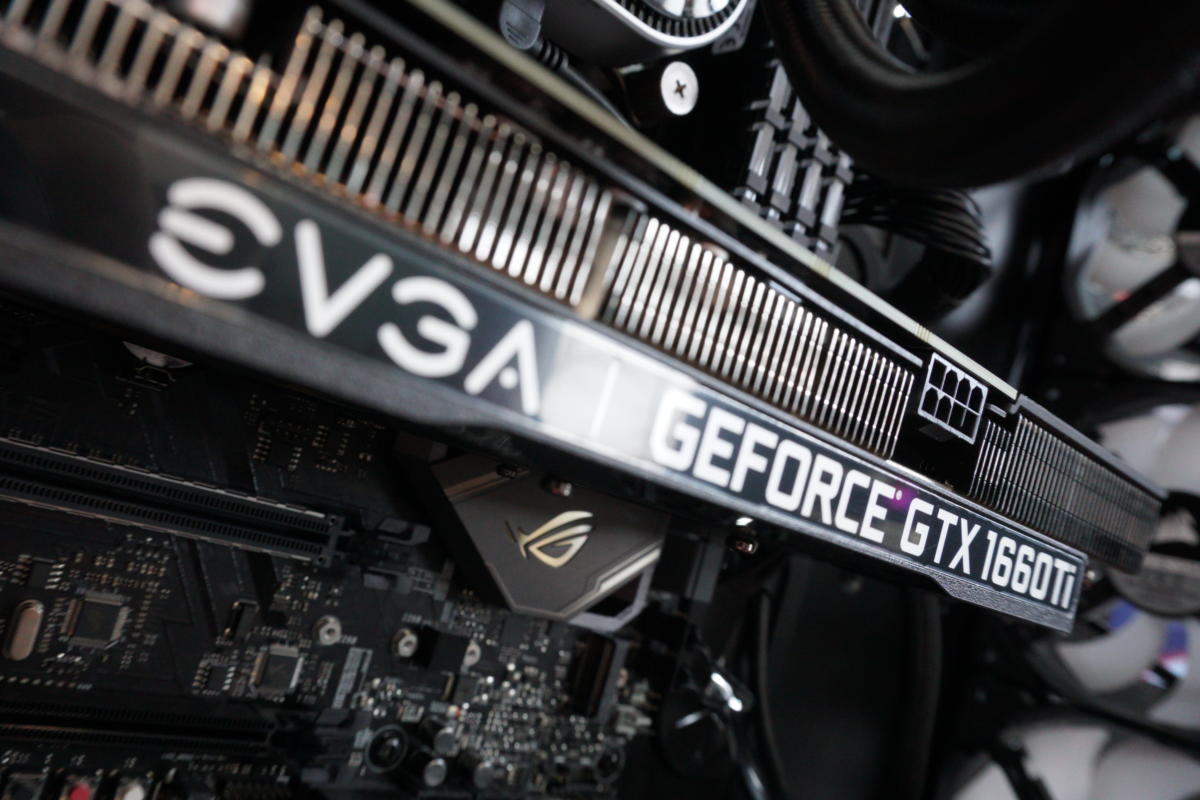
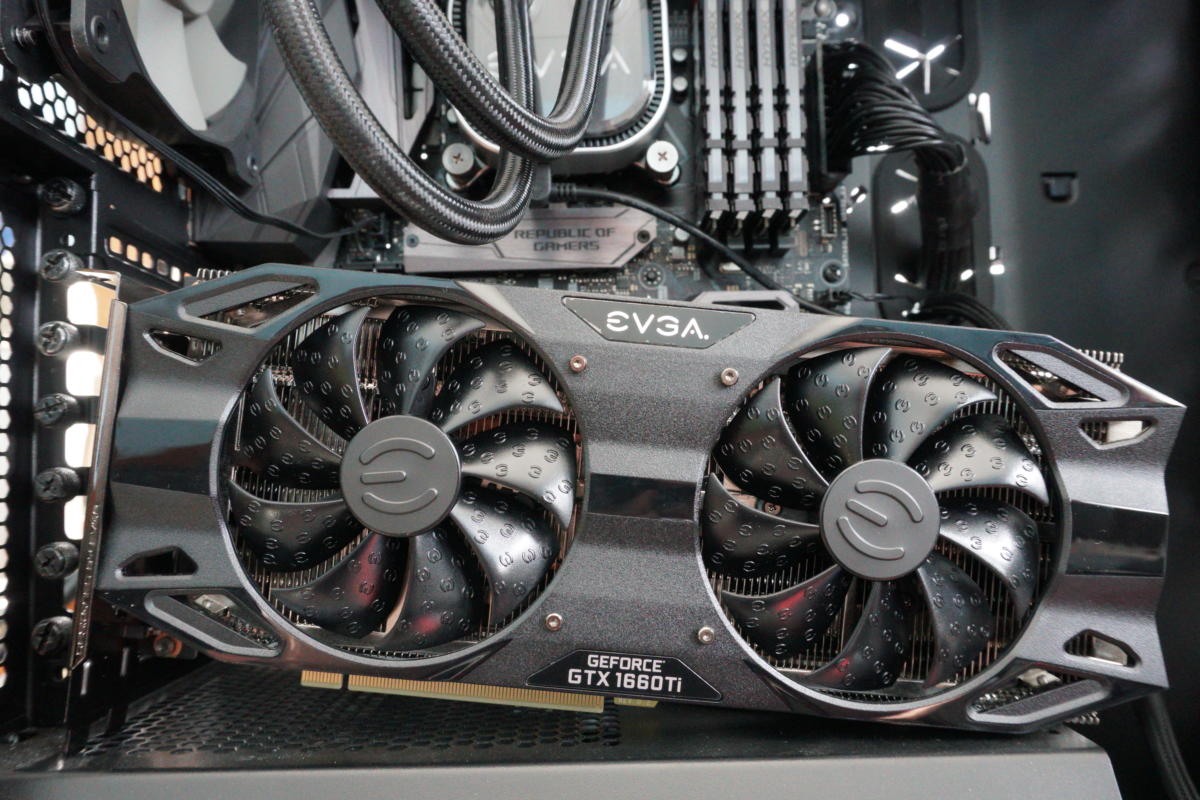
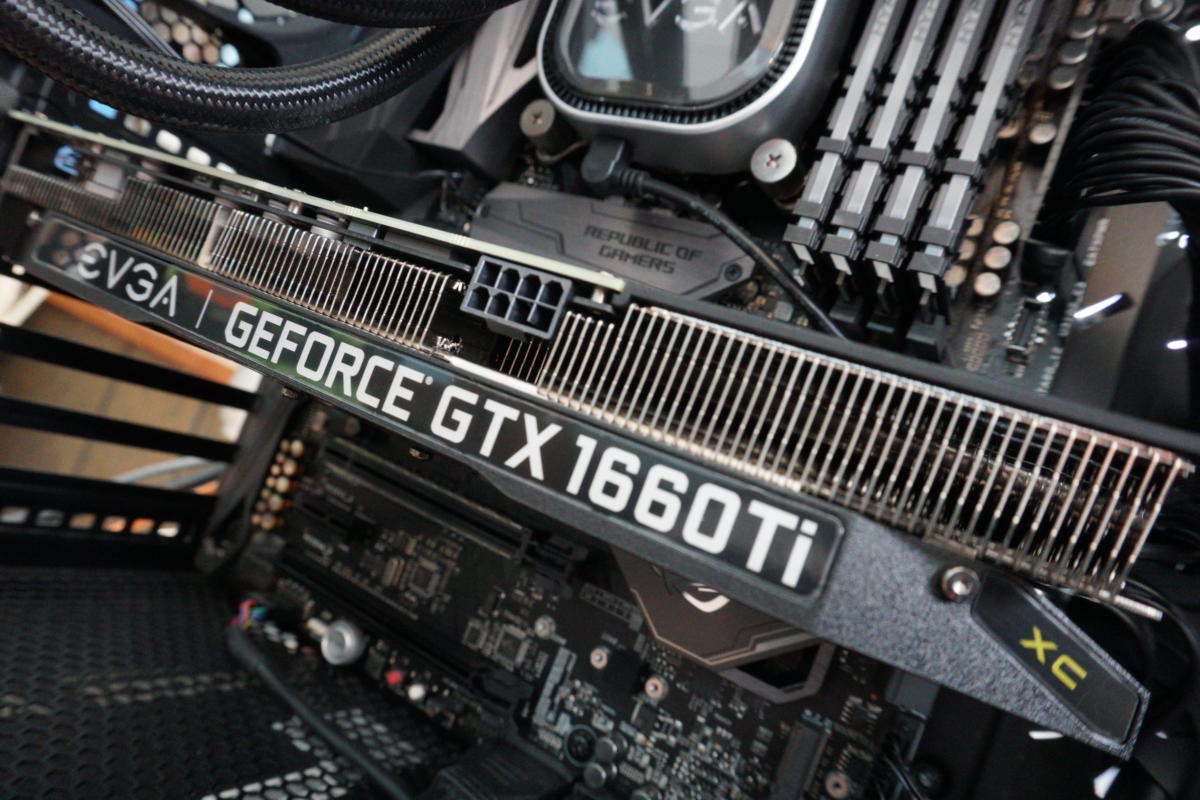
EVGA's graphics card maintains those supercharged clock speeds thanks to its potent custom cooler. The GeForce GTX 1660 Ti XC Ultra includes the overhauled custom-made cooling contrive found on many of EVGA's RTX 20-series GPUs. Dual hydraulic dynamic supporting (HDB) axial fans emblazoned with tiny "E"s posture atop a deep, dense heat go under, and EVGA claims that the mix of HDB fans with the tiny letters result in a 19 pct reducing in noise levels compared to competing fans with sleeve-productive fan designs. We can't quantify that ourselves, but thither's no more question that the EVGA GTX 1660 Ti XC Ultra runs pretty quietly for such a potent graphics batting order.
 Brad Chacos/IDG
 The custom cooler wasn't the only thing EVGA redesigned from the anchor up for this generation. The company's Precision X1 computer software has evolved into one of the slickest and easiest-to-practice overclocking tools lendable, with everything you need to push your GPU to fres heights—including deathly-simple united-clitoris machine-controlled overclocking for folk World Health Organization don't ilk to vex their hands dirty. It's highly advisable if you have any interest in tinkering with your graphics card.
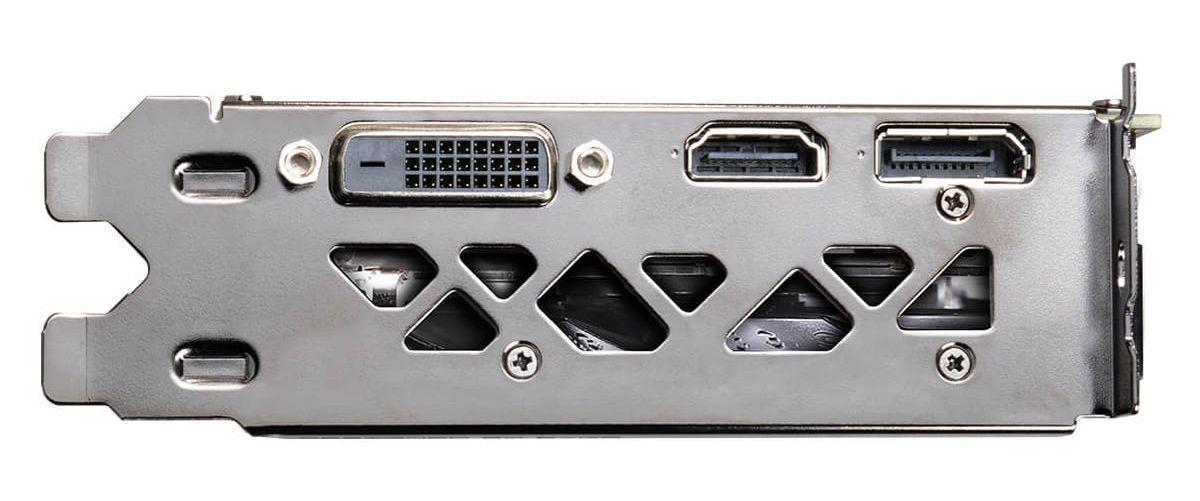
Reverting to physical design, the EVGA GTX 1660 Ti XC Extremist sticks to fundamental port options, constrictive itself to solitary HDMI, DisplayPort, and dual-link DVI connections—though we're really happy to see the latter some. By comparison, the Asus ROG Strix mopes DVI, only doubles abreast HDMI and DisplayPorts. EVGA's card measures 10.5 inches long-range and requires sole a concentrated 8-pin power connection, so IT should have No problem slipping into the vast majority of gaming PCs.
 EVGA
EVGA Wrapping things up, it's Charles Frederick Worth noting a few omissions on EVGA's card, RGB LEDs being the most glaring. We're fine with the decision, but information technology's more and more rare to see a modern nontextual matter card without flashing lights. The card as wel lacks a backplate, but that's not truly a negative either—just a point worth mentioning given that this is EVGA's highest-end GTX 1660 Si oblation.
Merely enough tech spec talk! Let's take the EVGA GTX 1660 Ti XC Extremist to the test Bench.
Next page: Our test system, benchmarks begin
Our test system of rules
Our dedicated graphics menu test system is packed with some of the quickest complementary components available to put any potential performance bottlenecks squarely connected the GPU. Most of the ironware was provided by the manufacturers, merely we purchased the cooler and depot ourselves.
- Intel Core i7-8700K central processing unit ($360 along Amazon)
- EVGA CLC 240 compressed-loop liquid ice chest ($120 connected Amazon)
- Asus Maximus X Hero motherboard ($260 on Amazon River)
- 64GB HyperX Vulture RGB DDR4/2933 ($318 for 32GB on Virago)
- EVGA 1200W SuperNova P2 index supply ($180 on Amazon)
- Corsair Watch crystal 570X RGB case, with front and top panels removed and an extra rear fan installed for improved airflow ($160 on Amazon)
- 2x 500GB Samsung 860 EVO SSDs ($78 each on Amazon)
We're comparing the $310 EVGA GTX 1660 Ti XC Ultra against the $330 Asus ROG Strix GTX 1660 Ti, as comfortably as its predecessor, an overclocked EVGA version of the 6GB GTX 1060. Rounding out the Nvidia side, we're likewise including the GTX 1070 Founders Edition and the ray tracing-capable $350 GeForce RTX 2060 Founders Edition.
To experience how EVGA's graphics lineup stacks up against the Radeon competition, we'atomic number 75 besides included carrying out results from the $260 Sapphire Radeon RX 590 Nitro+ (which launched at $280 in November), the $400 Radeon Vega 56, and the Asus ROG Strix variant of the Radeon RX 580. Many Radeon RX 580 models can consistently be found for low $200 on sale these days, even in 8GB variants.
Each game is tested using its in-game benchmark at the highest possible artwork presets, with VSync, redact range caps, and complete GPU marketer-specific technologies—the likes of AMD TressFX, Nvidia GameWorks options, and FreeSync/G-Sync—disabled, and temporal anti-aliasing (TAA) enabled to agitate these high-death cards to their limits. If anything differs from that, we'll mention it. We run from each one benchmark leastways three times and list the modal result for for each one test.
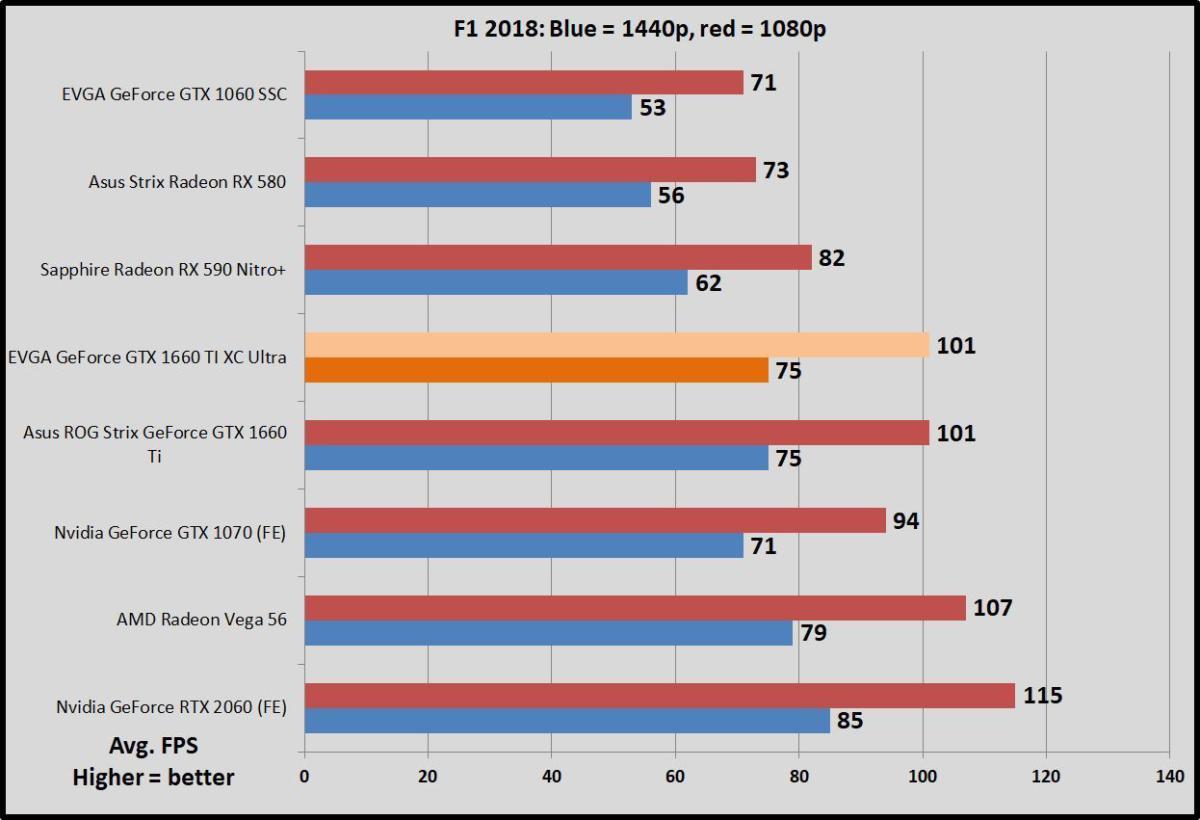
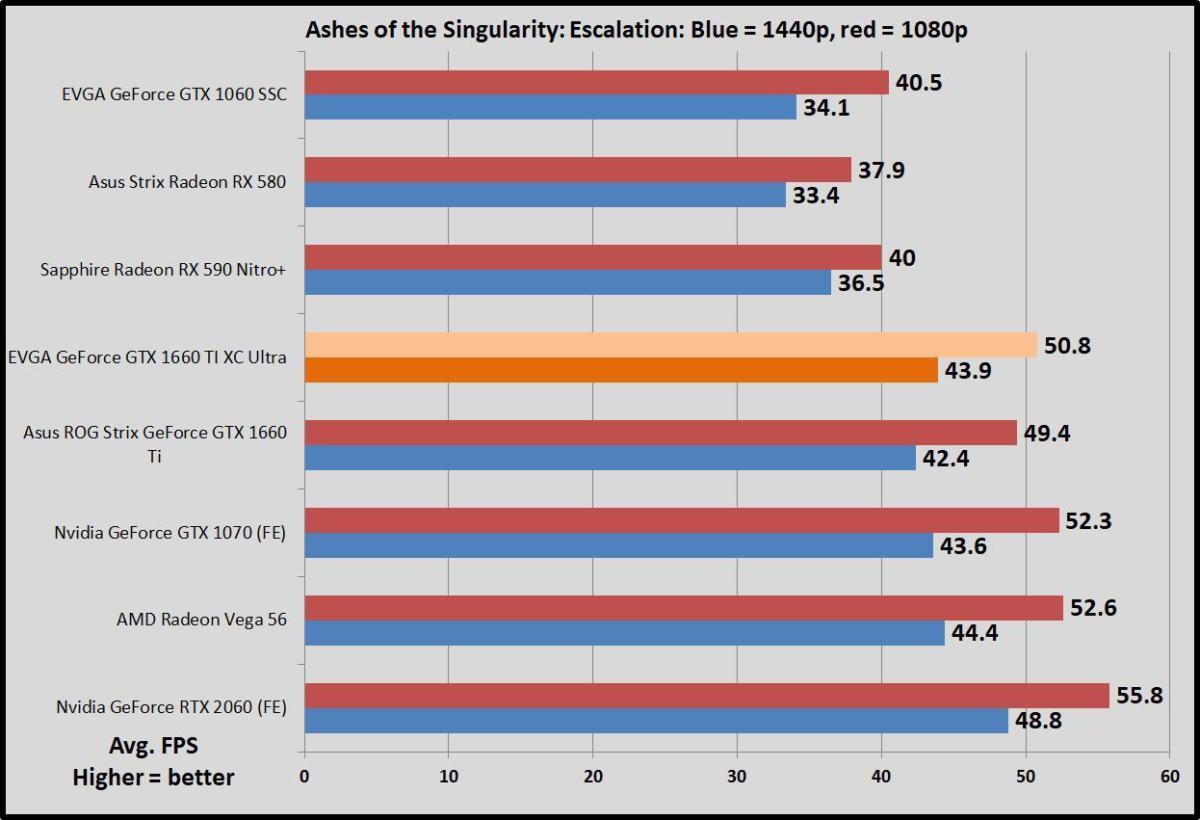
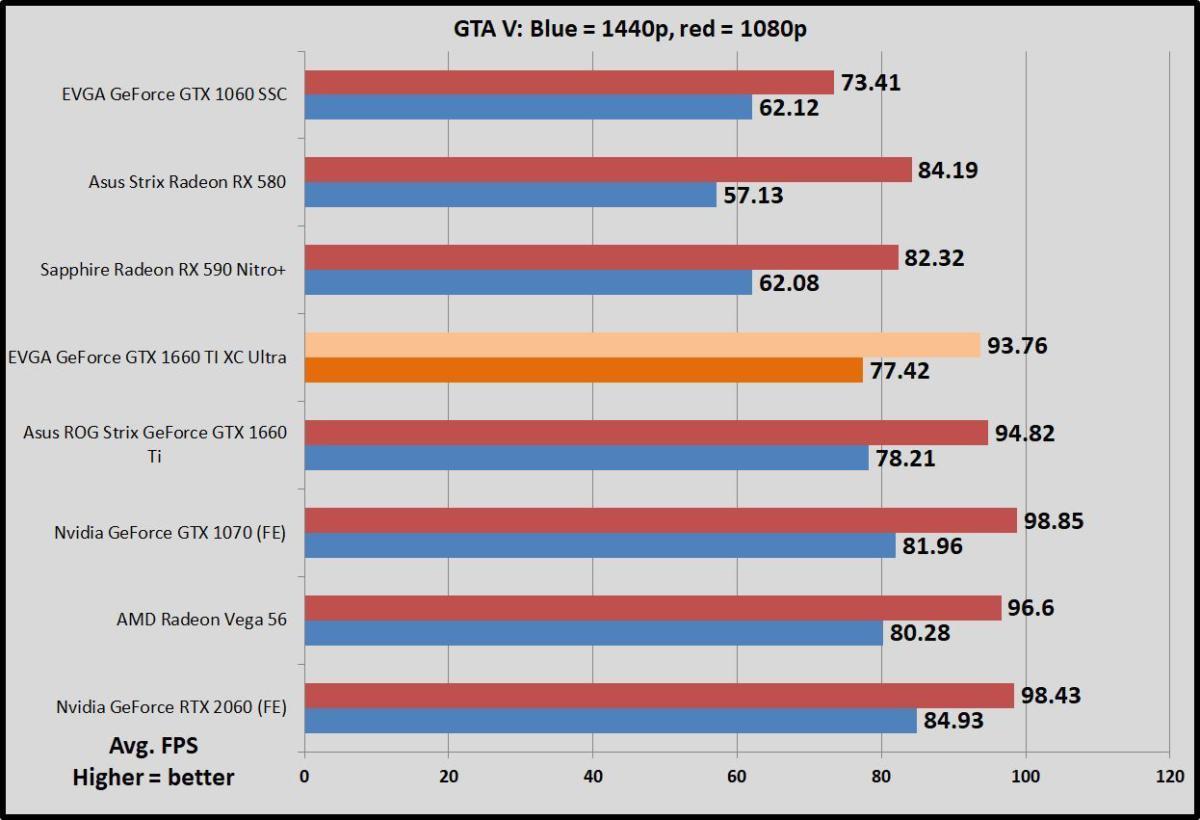
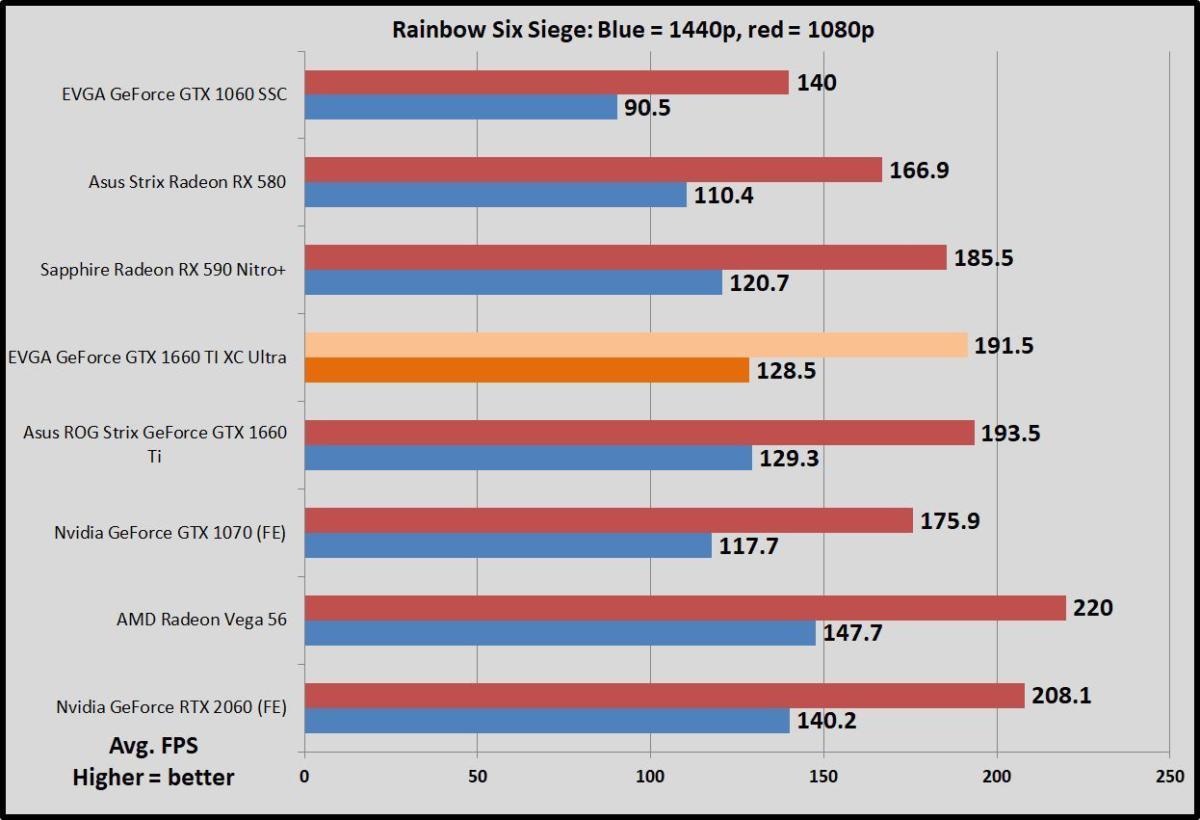
We limited our testing to 1080p and 1440p resolutions, as satisfying 4K gaming is mostly come out of the closet of the reach of this class of add-in. Because the EVGA GTX 1660 Ti's gambling performance results mostly mirror the Asus ROG Strix GTX 1660 Titanium's—it's a clear Radeon RX 590 killer whale—we'll refrain from commentary until the ability and thermals section, where differences between the 2 GTX 1660 Ti models become more clear.
EVGA GTX 1660 Ti XC Immoderate gaming benchmarks
Unusual Brigade
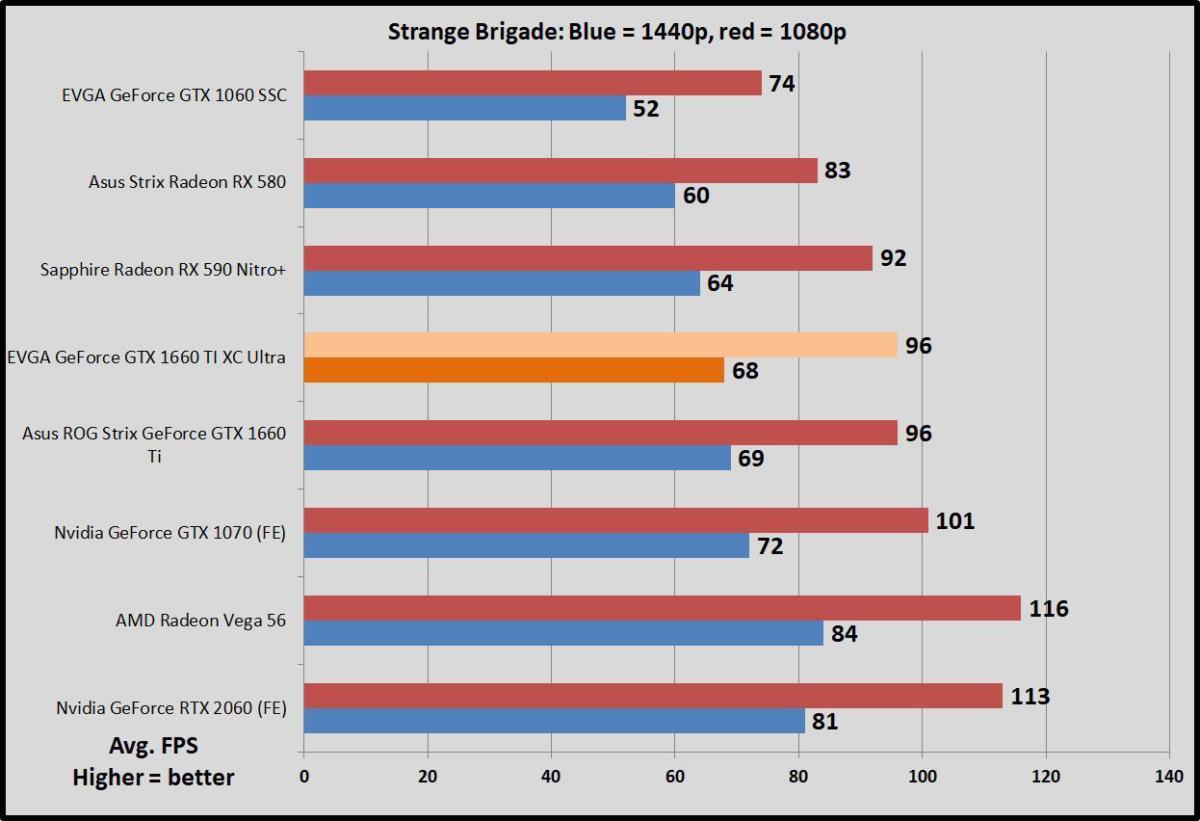
Lease's kick down things off with Strange Brigade ($50 on Base), a cooperative third-person shooter where a team of adventurers blow through hordes of mythological enemies. It's a scientific case, well-stacked around the next-gen Vulkan and DirectX 12 technologies and infused with features like HDR financial support and the ability to toggle switch asynchronous compute happening and off. It uses Revolt's custom Azure engine. We test with async compute away.
 Brad Chacos/IDG
 Shadow of the Grave Raider
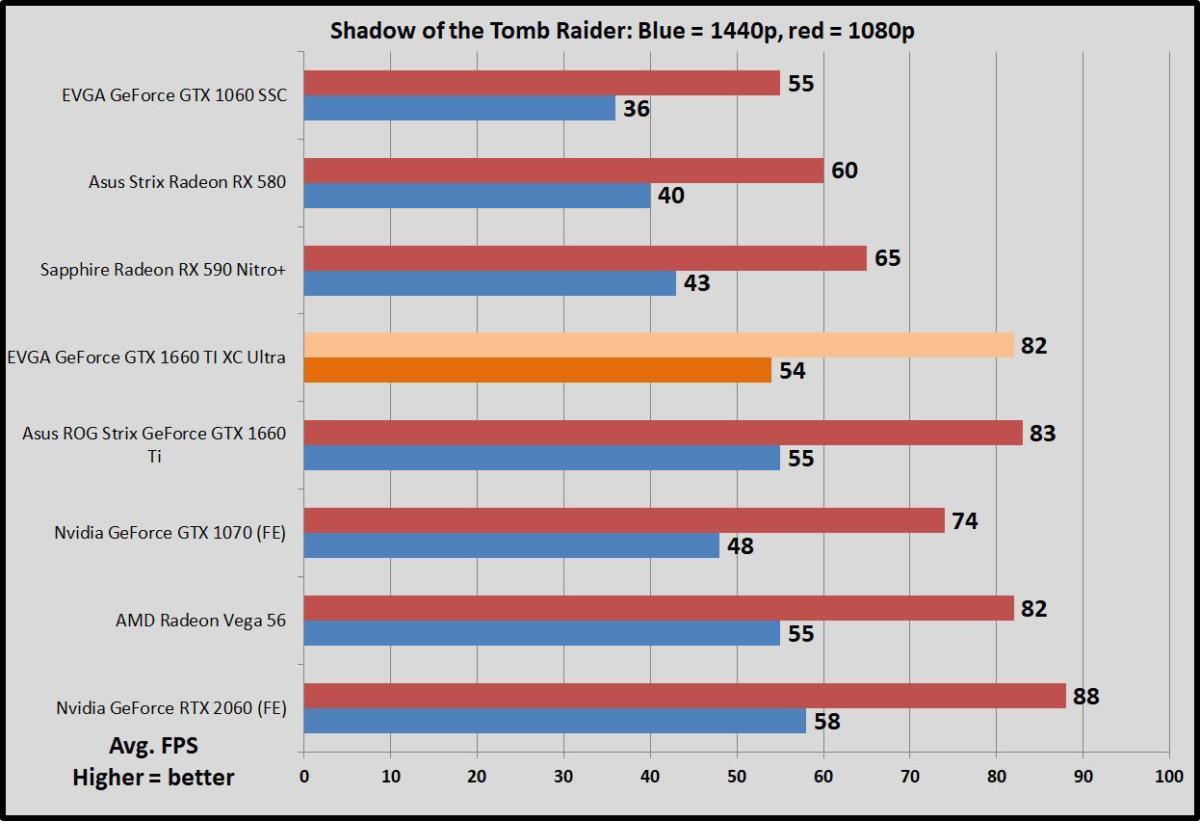
Shade of the Grave Raider ($60 on Humble) concludes the boot trilogy, and it's dead gorgeous—even the progressive GeForce RTX 2080 Ti barely manages to average 60 fps with entirely the bells and whistles turned on at 4K resolution. Square Enix optimized this game for DX12, and recommends DX11 exclusively if you'Ra exploitation older hardware surgery Windows 7, so we examination with that. Tincture of the Tomb Raider uses an enhanced version of the Foundation engine that also high-powered Rise of the Tomb Raider.
 Brad Chacos/IDG
 Far Cry 5
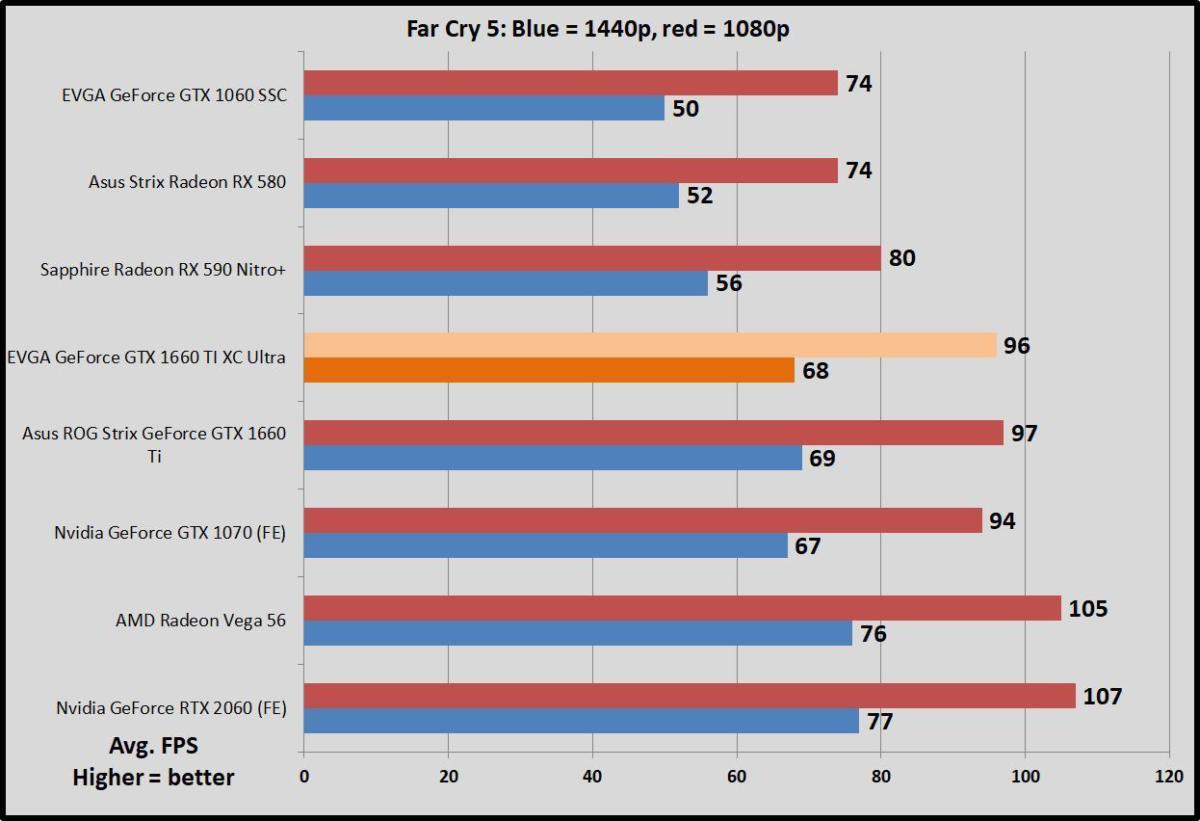
At length, a DirectX 11 game! Far Cry 5 ($60 on Humble) is powered by Ubisoft's long-established Dunia engine. It's evenhanded as gorgeous as its predecessors, and equal more fun. We'll likely replace IT in our retinue with the newer Far Shout out: New First light soon.
 Brad Chacos/IDG
 Next page: Play benchmarks continue
Ghost Recon Wildlands
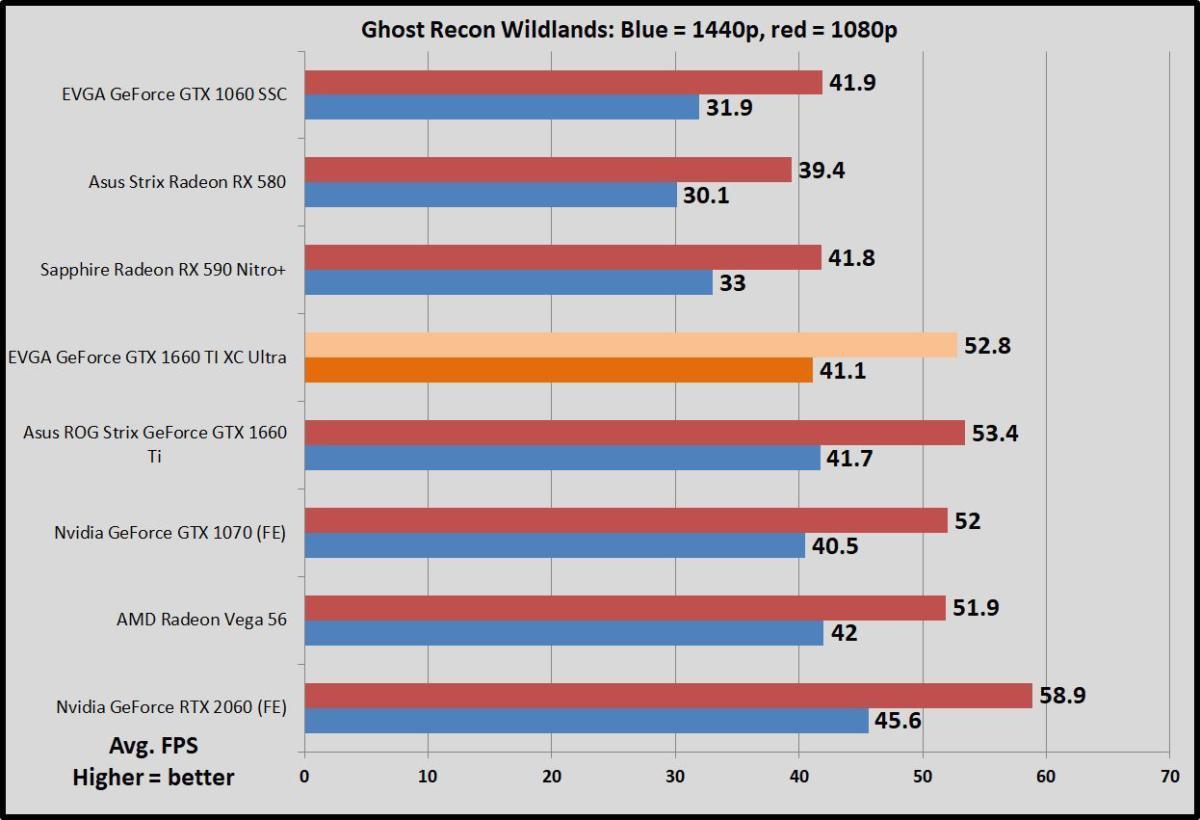
Yield, Crysis. If you crank entirely the graphics options rising to 11, like we doh for these tests, Trace Recon Wildlands ($50 on Humble) and its AnvilNext 2.0 engine absolutely melt GPUs. Ghost Recon Wildlands also prefers Nvidia's GPU architecture generally.
 Brad Chacos/IDG
 Middle-earth: Shadow of War
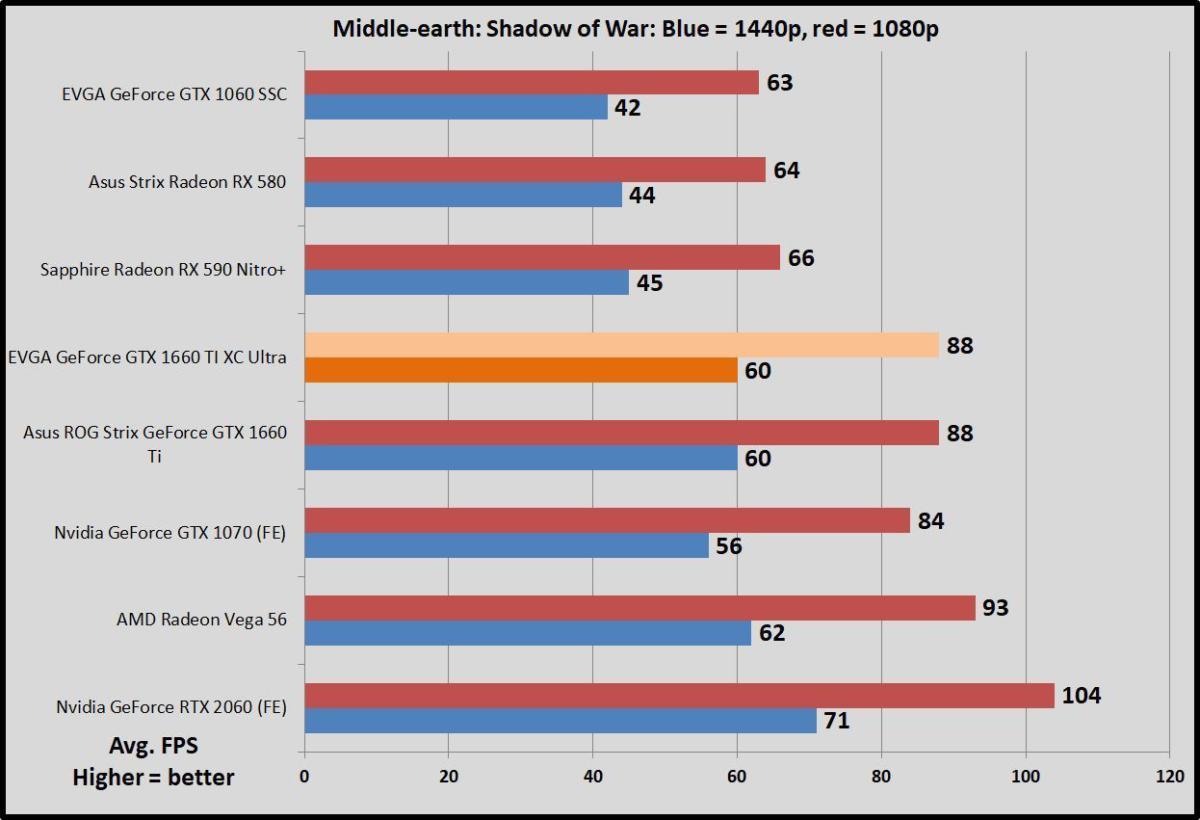
Middle-ground: Shadow of War ($50 on Humble) adds a strategic layer to the series' sublime core gameplay loop, adapting the Nemesis system to let you make up an army of personalized Orc commanders. Information technology plays like a champion happening PC, too, thanks to Monolith's custom LithTech Firebird engine. We enjoyment the Ultra graphics preset but drop the Trace and Texture Quality settings to High to avoid exceeding 8GB of VRAM usage in our examination scenario, because graphics cards that exceed 8GB of capacity are rarified indeed.
 Brad Chacos/IDG
 F1 2018
The latest in a long-dated line of successful games, F1 2018 ($60 on Humble) is a benchmarking gem, supplying a wide set out of some graphical and benchmarking options—devising it a much Thomas More reliable option that the Forza serial publication. It's made-up happening the fourth rendering of Codemasters' soapy-smooth Egotism game engine. We trial two laps happening the Australia course, with exonerated skies.
 Brad Chacos/IDG
 Next page: Gaming benchmarks continue
Ashes of the Singularity: Escalation
Ashes of the Singularity ($40 along Humble) was one of the very first DX12 games, and it remains a flag-bearer for the technology to this day thanks to the extreme scalability of Oxide Games' next-gen Nitrous engine. With hundreds of units onscreen simultaneously and some serious graphics effects live, the Taken with preset butt make water artwork cards exertion. Ashes runs in both DX11 and DX12, but we only when test in DX12, as it delivers the best results for both Nvidia and AMD GPUs.
 Brad Chacos/IDG
 GTA V
We'atomic number 75 exit to wrap things raised with few older games that aren't actually visual barn-burners, but still top the Steam charts day in and day impermissible. These are games that a lot of people play. First up: Grand larceny Auto V ($30 on Humble) with completely options turned to Very High, all Advanced Graphics options except extended shadows enabled, and FXAA. GTA V runs on the RAGE locomotive and has received substantial updates since its initial launch.
 Brad Chacos/IDG
 Rainbow Six Beleaguering
At length, allow's take a peep at Rainbow Six Military blockade ($40 connected Humble), a game whose interview just keeps happening growing, and one that still feels like the single truly next-gen shooter after completely these years. Ilk Obsess Recon Wildlands, this game runs on Ubisoft's AnvilNext 2.0 engine, but Rainbow Six Siege responds particularly well to graphics card game that lean on async compute features.
 Brad Chacos/IDG
 Next page: Power, thermals, noise, and synthetics
EVGA GTX 1660 Ti XC Ultra power draw, thermals, and noise
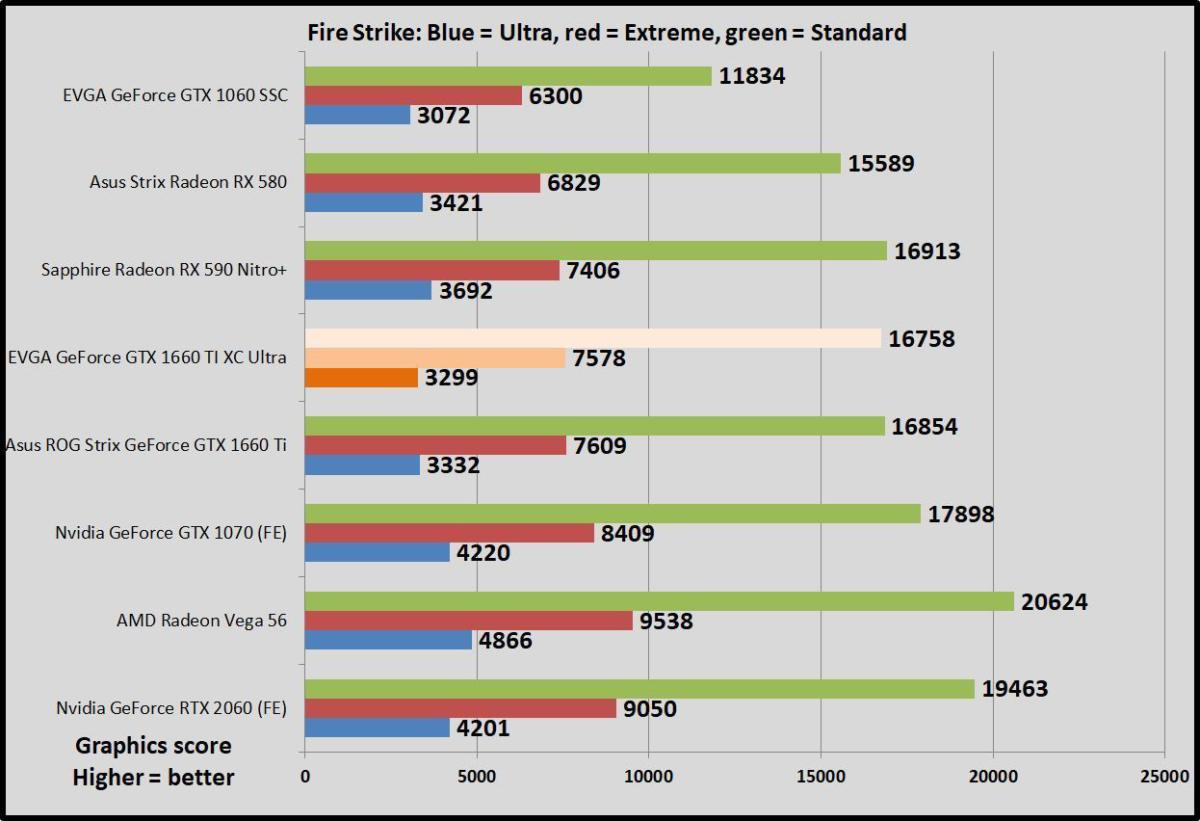
We also tested the Lazuline Radeon RX 590+ using 3DMark's highly respected Fire Strike synthetic benchmark. Fire Walk out runs at 1080p, Ardor Coin Extreme runs at 1440p, and Fire Strike Ultra runs at 4K resolution. All render the same scene, but with more intense graphical personal effects as you move ascending the scale, so that Extreme and Ultra flavors stress GPUs even more. We record the graphics score to eliminate variance from the CPU.
 Brad Chacos/IDG
 This is why you can't test cards based solely on synthetic benchmarks, though they're wonderful for relative saneness checks and combative overclocking contests. According to Fire Strike, the GTX 1660 Titanium is slower than the Radeon RX 590, and well behind the GTX 1070. That simply isn't true in actualised games.
 Brad Chacos/IDG
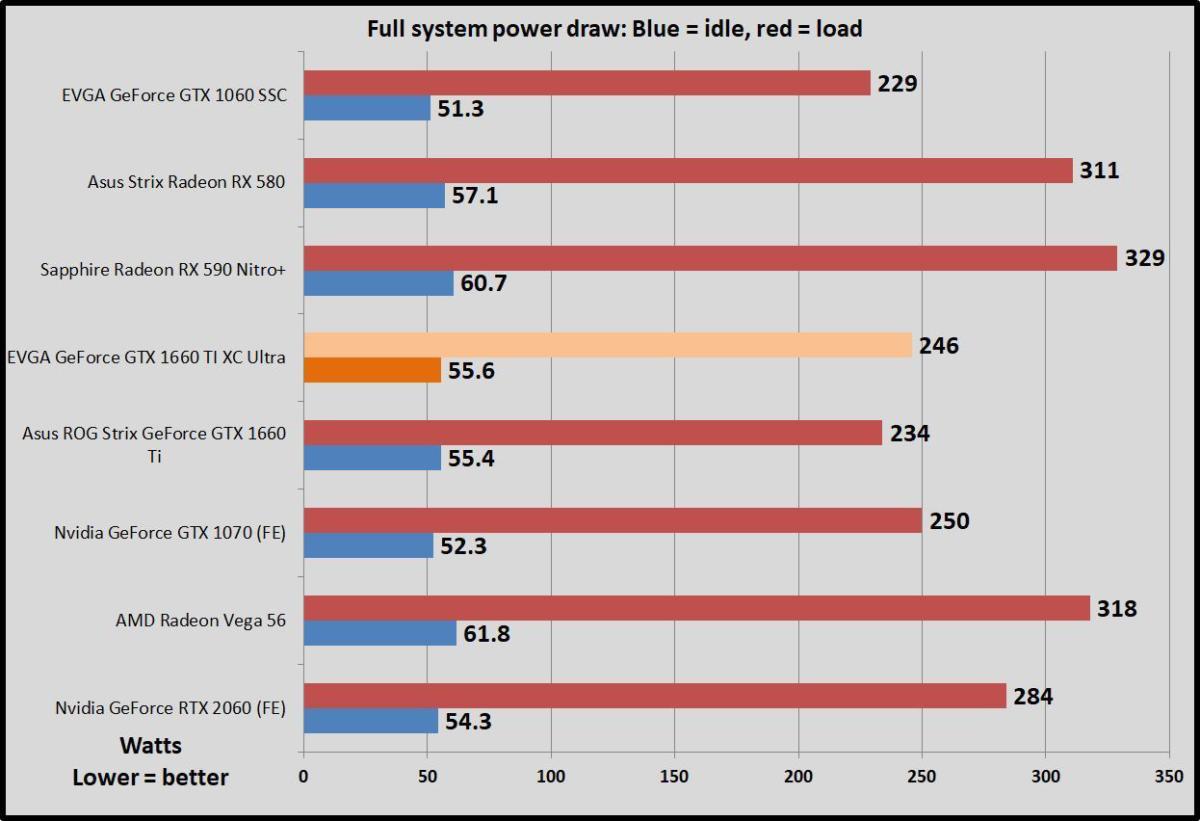
 We test power draw by looping the F1 2018 benchmark for about 20 proceedings later on we've benchmarked everything other, and noting the highest reading along our Watts Up Pro meter. The initial part of the race, where all competing cars are onscreen simultaneously, tends to be the most demanding portion. The GTX 1660 Ti is yet another will to Nvidia's clear power efficiency supremacy, drawing far less energy than its Radeon rivals, and some the same amount of top executive as the GTX 1060 spell delivering far Thomas More functioning per watt.
 Brad Chacos/IDG
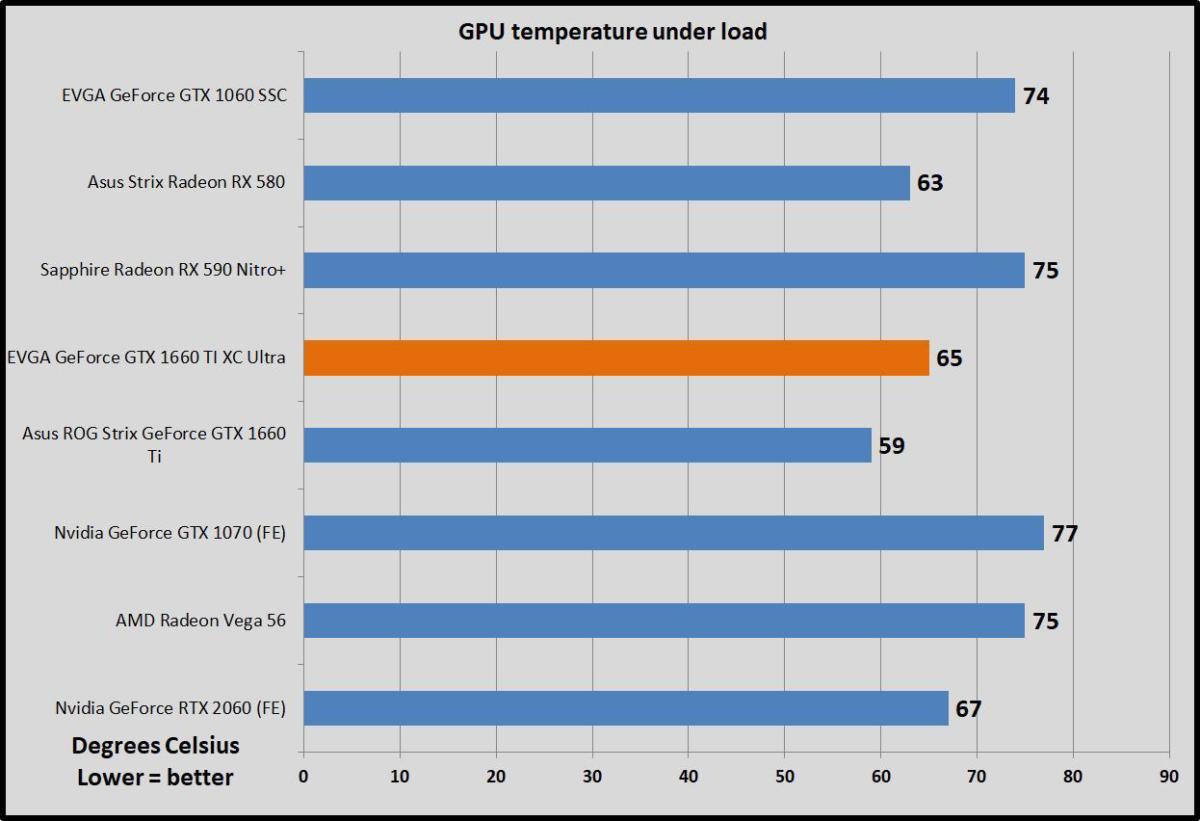
 We test thermals by leaving HWInfo's detector monitoring puppet open during the F1 2018 5-lap exponent draw test, noting the highest maximum temperature at the end.
Here's the biggest pure performance difference between the two GTX 1660 Ti models we've proven, the Asus ROG Strix and EVGA's Cardinal Ultra. The monumental ROG Strix runs ice-raw with very little fan noise, or utterly silently with the card's Quiet BIOS. But achieving that requires a monumental threefold-slot, triple-devotee cooler and a steeper price superior. The EVGA GTX 1660 Ti XC Ultra still delivers close to of the lowest GPU temperatures therein performance sort, information technology runs very quietly itself, and it does so in a more flexible dual-slot cooler design. They're both winners, albeit in very different shipway.
Next pageboy: Should you buy the EVGA GTX 1660 Ti XC Ultra?
Should you buy the EVGA GTX 1660 Ti 90 Ultra?
If you're looking for a great nontextual matter card that will countenance you game at in flood frame rates and none visual compromises at 1080p resolution, the $310 EVGA GTX 1660 Ti 90 Ultra should be on your short leaning. It's hefty sufficiency for 1440p play, too, and would wee a sublime pairing with a G-Synchronize operating room FreeSync variable refresh rank monitor. EVGA's built a very powerful nontextual matter card built around a really compelling GPU—one that utterly dismantles rival AMD Radeon RX 590 options, and one that renders the GTX 1070 obsolete unless you get one along a large sale.
 Brad Chacos/IDG
 The EVGA GTX 1660 Ti Ninety Ultra is a high-performing, all-around graphics card
The XC Extremist justifies its $30 premium over baseline GTX 1660 Ti models thanks to its hefty overclock and potent customised cooling. GPU time speeds hover around 2GHz in most gaming scenarios, and EVGA's cooling solution runs chili pepper and quiet while maintaining a reasonable dual-slot design that should have atomic number 102 trouble trying on in most play PCs. The need for only a single 8-oarlock power joining adds to its versatility.
Information technology's lacking in luxurious extras, withal. The XC Ultra doesn't include RGB LEDs or a backplate, not to mention carrying out-fixing features like the dual-BIOS switch, adaptive rooter headers, and discrete Light-emitting diode release found on the Asus ROG Strix GTX 1660 Ti. The Strix's monstrous triple-slot, triple-rooter cooler won't fit in all cases, however, and it costs $330—$20 to a higher degree the XC Extremist, and a untasted $50 more than the GTX 1660 Ti's baseline MSRP.
You can't go wrong with either of these card game. The Asus ROG Strix is a colossal, badass, and minimum overkill graphics card shapely for the proverbial 1 percent who neediness all the bells and whistles and don't mind paying extra for them.
EVGA's card is probably finer for almost mass. It delivers a high level of performance similar to the Strix, with a with child cooling solution, but avoids wasteful extras to keep the price from getting too high. Plus, it offers an all-too-rare DVI connection.
The EVGA GTX 1660 Ti XC Ultra is accelerating, cool, quiet, energy-efficient, and broadly compatible—a killer compounding. And the party's brilliant Preciseness X1 overclocking software serves as a luscious cherry connected top. It's a bully graphics posting.
 Brad Chacos/IDG
 Note: When you purchase something afterward clicking golf links in our articles, we may earn a smallish commission. Read our associate link policy for more inside information.

Source: https://www.pcworld.com/article/403410/evga-geforce-gtx-1660-ti-xc-ultra-review.html
Posted by: shanenothater.blogspot.com
0 Response to "EVGA GeForce GTX 1660 Ti XC Ultra review: Laser-focused on all-around great performance - shanenothater"
Post a Comment